
Hello, I’m Elisa
Welcome to my little section of the Internet! My life fell apart in 2016 after a brain injury and this is me–navigating various health conditions, writing about my experiences, and hopefully helping others.


-
Welcome to my blog!

If you’ve talked to me in the last year, you know this blog has been a long time coming. If you’ve never met me (and even if you have) this post is for you. I am a smiley, fun-loving person but Ima let you know right here and now, this post, this blog will discuss heavy and sensitive but very important topics.
Ok, now that you’ve been trigger warned, I will proceed.
I understand pain. I understand suffering. I understand how it feels to have your body betray you. I understand how it feels to have your thoughts dictate your happiness. I understand how it feels to cry until you no longer feel human. I understand how it feels to desire death more than anything else.
But I’m still here.
This blog is about sharing the past four years. Sharing thoughts, trials and hopes. This blog is about learning to live again and learning to dream again. And friend, this blog is about you too. Come here when you feel alone. Come here when you feel no one on earth could possibly understand you. Come when the person on the inside doesn’t match the one without.
Know this though, if you come here, whether it’s for one post or for all, my request of you will always be this: DON’T GIVE UP. If there’s anything to hold to in this life it’s hope, no matter your definition or spiritual inclination. That being said, welcome to my blog. Welcome to The Riverbend.
Love Always,
Elisa
-
How owning a pet has benefited my life as a disabled person

<<Image description: A photo of Simon siting on Elisa’s bed taken from slightly below him. Simon is a green-eyed cat with white fur and brown tabby patches. One paw is curled under him and the other rests a little over the bed’s edge. He is not looking at the camera.>>
My one and only fur child turned seven in June and it’s had me reflecting on our past four years together. I wanted to adopt a pet to lighten my loneliness, and to have more than a stuffed animal for comfort. So yes, I adopted Simon for purely selfish reasons. And you know what? It’s worked out pretty well for us both. Poor, traumatized boy got a chance at probably his best, most pampered life, and I got a meowing companion.
No good pet parent alive can deny the joy and support their domestic creatures provide, but I think pets provide particular benefits to the disabled and chronically ill.
So here are seven ways Simon has made my life better:
1. His physical proximity
I’ve been home bound for a great deal of this brain injury journey. Inability to drive, lack of energy and an influx of physical pain makes for a pretty lonely existence. Having a living, breathing, heat producing being near is oh so comforting. Obviously its not as comforting as having people near, but Simon shrunk the glaring hole in my life to a more manageable size. I wasn’t so alone anymore.
According to a John Hopkins Medicine article, interacting with Simon floods my brain with oxytocin, often called the “love hormone.” This is the same feel-good hormone a person gets when hugging someone they love.
2. Taking care of him
Not being able to care for myself without help was a frustration hard to adequately express. Taking care of myself felt less like an ability and more like a right. So when I couldn’t do it I felt indignant and helpless.
Being able to care for an animal helped ease the ache of the demoralizing blow physical inability left me with. I couldn’t cook myself a meal, but I could poor Simon’s kibble. I couldn’t wash my hair properly, but I could brush Simon’s fur until it gleamed. I couldn’t make my own bed, but I could make his.
3. Giving him pets
I had to re-learn how to self-soothe as an adult, something infants and children intrinsically do to make themselves feel better. I think this concept was re-introduced to me in the context of cognitive behavioral therapy. I was encouraged to find physical ways to ease emotional turmoil. Grounding myself through tactile means became my go-to, whether it was running my hands over clothes, or putting a hand over my heart and tapping lightly.
Introducing a cat into my emotionally charged life gave me my favorite way to self-soothe- giving pets. Luckily for me, he’s a willing and eager participant 80% of the time. The John Hopkins article also said petting Simon actually decreases the level of cortisol (stress hormone) in my body.
4. Reminding me to stay present
Something I’ve always struggled with, even before brain injury, is staying present. One thought can fork into ten and then I’ve just spent five minutes in an internal world of unreality instead of focusing on the thing at hand.
Having a cat has helped root me in the current moment. I think it has something to do with how peaceful he looks when he’s napping and how actively he responds to stimuli when awake. He is very present in his environment and it makes me want to be as well. Just watching him be his kitty self has become a mindfulness activity. No thoughts. Just me watching, admiring and appreciating my cat.
5. Being my familiar
No, my cat does not assist me in doing magic and I am not a witch, but I do feel like Simon fulfills the role of a “familiar” from European folklore. He is my best companion and biggest fan. He watches me like a hawk and wants to know what I’m doing every time I change positions. He is aware of my mood, temperament and energy, and I am aware of his. If only he could actually speak.
6. Making me laugh
I was definitely lacking in the myrrh department before I adopted Simon. Sure life had it’s funny moments, but having the bodily experience of laughing on a regular basis was something I was missing.
I had no idea pets were so amusing, especially species felis catus. The amount of facial expression Simon has is staggering and one look from him can send me into a fit of giggles. He’ll momentarily become possessed and get this deranged look in his eyes and start running around the house, crashing into things. He also loves to hunt and feast on each and every insect he comes across, including flies. Even his meows are hilarious.
7. He’s a reason to get out of bed
There are days when I open my eyes and I think, “Not again! I have to do this again? I have to get up and live another day of my life in this body again?!” And then I don’t want to leave my bed because getting up means I have to face the actuality of those thoughts. Knowing Simon prefers it when I feed him and is so happy to see me in the morning, is a motivating force that ejects me from my sleeping sanctuary.
There are plenty more ways Simon has improved my quality of life, but I thought seven would do for this article. So if you’re dealing with any of the struggles I described above, and if your health and finances allow, consider adding a fur baby to your clan. The mutual love between human and pet is something I hope everyone gets to experience at least once in their lives.
Love Always,
Elisa
Article referenced: https://www.hopkinsmedicine.org/health/wellness-and-prevention/the-friend-who-keeps-you-young
-
Making it to the ceremony: A wedding party guide for humans, especially those low on spoons

<<Image description: Over a professional wedding photo of Elisa by Avery Kwong the words “Enjoy the next wedding” are written in a casual but scripty font. In the photo Elisa is walking down the isle at her cousin’s wedding with a big smile on her face. She is wearing a wine-colored bridesmaid dress and is holding a small bouquet of pink and red roses.>>
If this title sounds like utter nonsense to you, STOP. Read this first!
I’ve wanted to write a piece on weddings for a while now. Basically every time I’m in a wedding I think about writing a little guide for us low-energy, high-pain people. But even if you don’t fall into those categories, I think we could all use a little more prep when it comes to wedding weekends and everything that goes along with them.
I’m writing from the personal experience of being a spoonie bridesmaid four times over, but I’m not a medical professional, so please consult your care team for extra tips for your specific situation.
That said, let’s start months before the wedding festivities even begin:
Before any events
Know yourself. I don’t mean existentially. I mean physically and emotionally. I know a lot of us tend to dissociate from our bodies because living inside them is unpleasant, but it’s really important to know how your body reacts and responds to stress, stimulation and surprises. Knowing the warning signs to your energy battery running low can make the difference between a delightful and an extremely disagreeable wedding party experience.
Enforce boundaries. So many people struggle in this area, especially during exciting events. It’s especially important for spoonies to communicate their boundaries because it enables them to get the most out of festivities and make it through to the actual nuptials.
If communicating or enforcing boundaries isn’t your forte, the only way to improve is to practice. Practice telling friends or family things like, “Hey, I’m going to sit down for a bit,” or, “I’m going to step out for a while.” Practice leaving somewhere early, or not participating in every activity at an event.
Practicing also helps you feel more confident in what verbiage you use with others. The people around you are going to want to know if you’re OK and knowing what to say in response can be anxiety provoking. Medical conditions can be pretty complicated, so my recommendation is to keep responses short and simple. For example, “I just need to rest,” or “I struggle with fatigue/low energy,” is sufficient.
If whoever asked after your well-being is interested in having more of a conversation, it is 100% up to you whether you share more details. Remember, you do not owe anyone an explination for why you do the things you do to keep yourself well. Kudos to my rehab psychologist for helping me embrace this!
However, there is at least one person that needs to be aware that you aren’t an Energizer Bunny:
Inform appropriate individuals. Let the point person, often the person of honor, know your medical condition and how involved you can be in running the show. It is not the job of whoever asked you to be in the wedding party to do this. It’s your job. Hopefully the point person will be able to help you with accommodations such as wheelchair accessibility, or providing a seat for you in case you need to sit during the ceremony.
Decide what your level of support can be for planning, prepping and executing events, and communicate this to whoever is in charge of those events. Remember, you cannot predict how you’ll feel the day of these events, so be prepared to make adjustments.
Plan alcohol* intake. Will you imbibe or refrain? How does your body function with alcohol flowing through those veins? Know how many drinks is safe for you to consume in any given time frame. How many days in a row can you partake without adverse effects? It might also be helpful to decide beforehand the specific events you will drink at. For example, deciding not to drink at the bachelor(ette) party so you can drink at the wedding, or vise versa. Causing a flare-up the day of a wedding because you took a risk and had a drink the night before, although tragic and unfair, can totally be avoided.
*Please do not consume alcohol unless you are of age. Also, I would be remiss if I did not say that the safest option would be to not drink at all. Alcohol kills your brain cells, and those are kind of important.
Prepare for FOMO. You will be missing out in one way or another and although sad and dissapointing, it’s how you will preserve your spoons. Don’t let FOMO (fear of missing out) make you compromise your boundaries, or alter your mood enough to spoil the fun. You probably won’t dance the whole time at the reception, or at all, and you might have to leave before the send-off. The important thing is you showed up! You were there for your friends and got to support them on their special day!
………
If the wedding festivities do not occur where you currently live and involve travel or over-night stays, these next tips are for you:
Plan meals. Familiarize yourself with your body’s nutritional needs and plan accordingly. How does your body respond to inflammatory foods? Will you bring your own food or snacks for the weekend? Will you go grocery shopping when you arrive so you don’t have to eat restaurant food for every meal? Did you inform appropriate parties of your dietary restrictions for catered events?
Plan arrival. Plan to arrive the day before any scheduled activities. This way you will have some time to recover from travel and acquire at least one night’s rest at your new location. You might need more than one day to recover from travel, so keep in mind your specific situation. Also, if you have spine/neck conditions and plan to stay at a rental with the wedding party, make sure you communicate that you need to sleep on a mattress versus a couch or floor.
Spread out packing. Do not. I repeat. Do not, pack the day of the trip! Don’t even pack the night before. Packing always takes more physical and mental energy than anticipated so, if at all possible, spread out your packing in the week before departure. Make sure you don’t forget care products such as heat/ice packs, supplements, pain management tools, and the like. There’s so much to say on the topic of travel, so I’ll probably dedicate a whole post to it in the future.
………
With all this prep taken care of beforehand, you’ll experience more peace of mind and an increased ability to be present with your friends. With these last suggestions, you’ll hopefully be able to enjoy yourself when the wedding festivities actually begin:
Day of events
Be flexible. This is really hard to do in general, especially for me! It’s difficult to be flexible when you have your mind set on something going a certain way. Flexibility is one of those life hacks that once embraced, will ease frustration by many many degrees.
Because it’s impossible to predict how you’ll feel on any given day, you might wake up the day of an event and not be able to help or participate in the way you originally planned. If you still want to lend a hand, flexibility can help a great deal. This can look like, “Hey, I can arrange the table settings if someone else can set up the chairs.” Or, “I’ll help you with that, but I’m going to sit over here and do it.”
It’s also completely within your prerogative to skip an event entirely. If you don’t think you can make it through the rehearsal, welcome dinner and bachelor(ette) party in one day, then skip something. If you just show up to the rehearsal and nothing else until the ceremony, that is OK. Hopefully the people getting married know you well enough to understand your decisions. If they don’t…well, then you probably wouldn’t be in their wedding in the first place.
Locate the essentials. Find the water sources! Dehydration is a sure recipe for passing out at any party. Also, locate the quieter places where you can sit, lie down or recharge. If it’s a bathroom stall, then it’s a bathroom stall. Bathroom stall breaks are better than no breaks at all. Take that time to rest. Maybe do some breathing exercises, or pop those salt tablets. These little breaks can counteract the effects of adrenaline and prevent a crippling crash.
Enjoy yourself. We’ve come to the most important part of the whole wedding party process- the joy of celebrating your friends get married! By this point, you’ve taken the time to plan and prepare and made sure to keep yourself well and safe, so now it’s time to give yourself permission to enjoy the festivities.
Take in all the hard work that went into throwing this mother-of-all parties. Revel in the beauty of love and two people committing to stand by each other in sickness and in health. Delight in the gratitude of being asked to be a part of such a special day.
………
Well, this is probably my longest post to date and I’m cringing at the repetitive language, but I had so much I wanted to share. I probably missed things too, so let me know your wedding party tips. I truly hope you can enjoy the next wedding you’re a part of!
Love Always,
Elisa
About Me
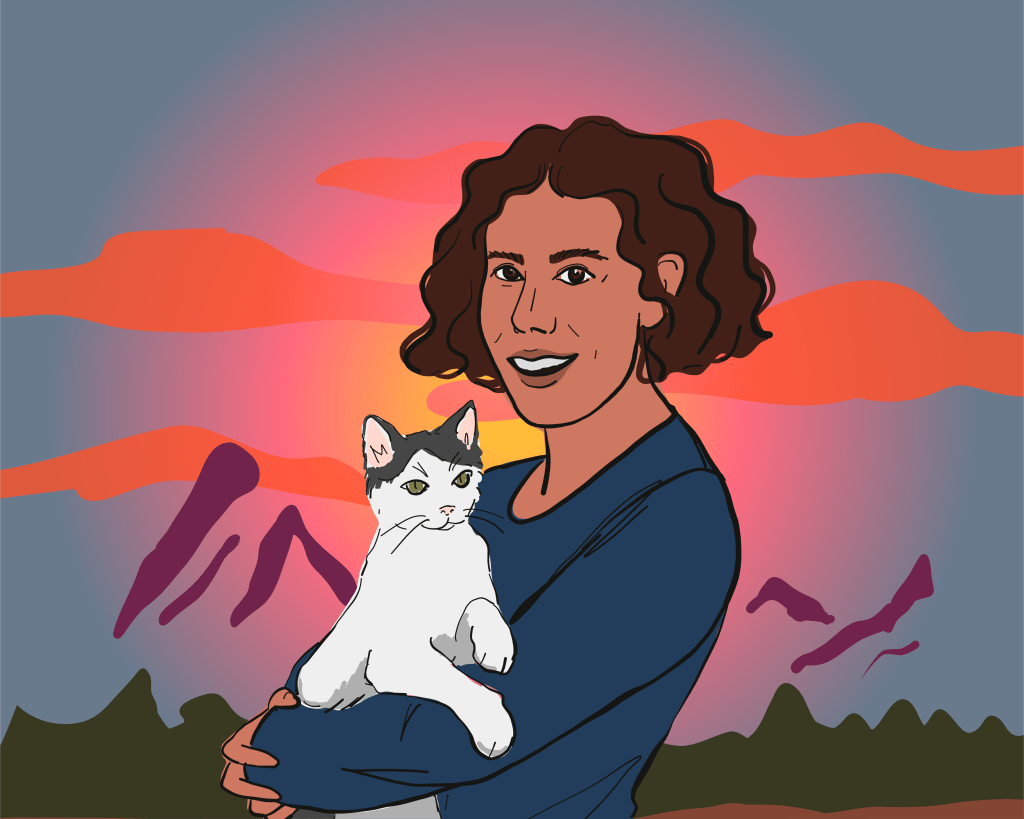
I am a 90’s kid who developed a love of writing at age 10. I went to school for communication and English/journalism and now I’m a spoonie advocate and a content creator.
Receive email notifications!
Subscribe and get an email every time I publish a piece.
 Elisa Jeannette